Sound & Frequency Supports: How Resonance Can Help the Nervous System Settle
Sound is one of the oldest ways humans have regulated the nervous system — long before we had language to explain what was happening.
A steady rhythm, a low tone, a familiar vibration can signal safety to the body in ways the mind doesn’t need to understand.
When used gently, sound and frequency can support nervous system regulation — not by fixing anything, but by helping the system soften out of high alert.
Sound works through resonance, not force
Sound doesn’t act on the body like a treatment.
It works through resonance.
When the nervous system is overstimulated or under pressure, it often loses a sense of internal rhythm. Gentle sound can offer an external reference point — something steady the body can orient to.
This is why sound-based supports tend to help with:
settling
grounding
body awareness
Rather than symptom removal.
The body decides whether it responds. Sound simply offers the invitation.
Regulation is about safety, not stimulation
A lot of frequency-based tools are marketed using language around healing, activation, or optimisation.
That framing doesn’t work well for sensitive nervous systems.
From a regulation perspective:
louder is not better
stronger is not more effective
intensity is not required
In fact, for people prone to migraines, anxiety, or sensory overload, too much sound can be dysregulating.
The forms of sound that tend to support regulation are:
low and gentle
short in duration
predictable and consistent
Less about doing something to the body — more about allowing the body to respond.
A Human Design lens on sound sensitivity
From a Human Design perspective, sound interacts differently depending on how energy moves through the body.
People with more openness — particularly in pressure or awareness centres — often experience sound more intensely. What feels soothing to one person may feel overwhelming to another.
Sound-based supports work best when they:
respect sensitivity
allow choice
don’t demand participation
This is why simple tools, used briefly and with awareness, are often more effective than immersive sound experiences.
Sound doesn’t need to override your design.
It can support it — when used appropriately.
Tuning forks as regulation tools
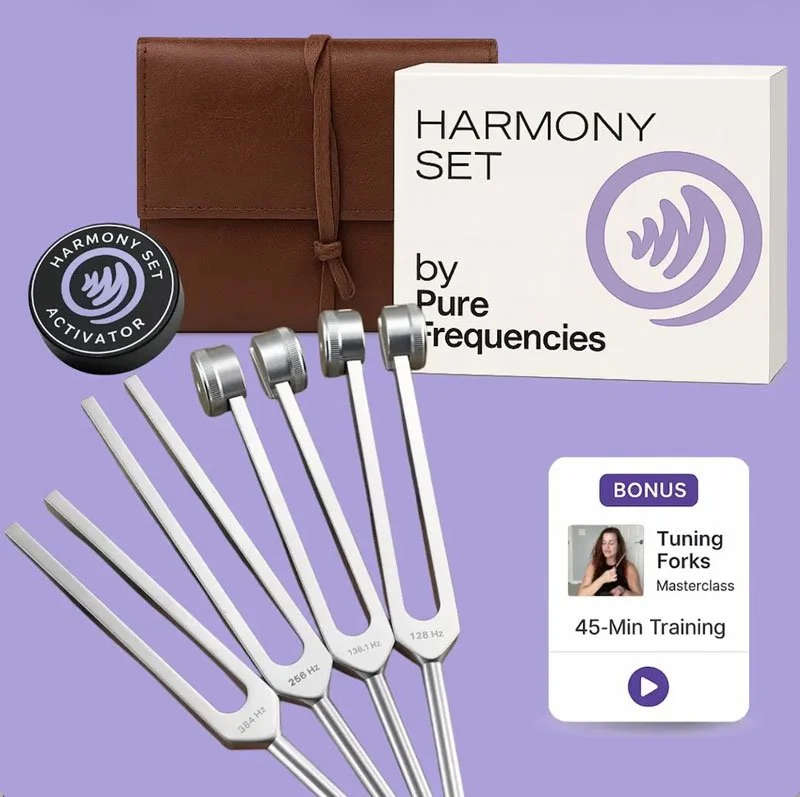
I use tuning forks as resonance tools, not healing tools.
Their value isn’t in the frequency number itself — it’s in how the vibration can help the nervous system:
settle
orient
come back into the body
Used gently, tuning forks can support awareness without overstimulation. Used forcefully, they can do the opposite.
In my experience, education around how to use tuning forks matters far more than chasing a specific Hz.
Why I chose PureFrequencies
I purchased my tuning forks from PureFrequencies because they prioritise education alongside their tools.
With purchase, they include:
clear instructional videos
a guided masterclass
practical demonstrations of gentle use
This matters — especially for people who are sensitive or new to sound-based supports. Proper use reduces the risk of overstimulation and helps people work with sound in a way that supports regulation rather than intensity.
I share them here because I’ve used them myself and value their educational approach.
When sound may not be supportive
Sound and frequency tools are not always appropriate.
They may feel irritating or overwhelming if:
you’re in an acute migraine
your system is already overstimulated
sound sensitivity is high
In those moments, the most regulating option may be silence, darkness, or stillness.
Listening to the body’s response matters more than following a method.
Sound as part of a wider support system
Sound works best when it’s not used in isolation.
It often complements:
breath practices
gentle movement
sensory or environmental adjustments
That’s why I place sound and frequency supports within a broader nervous system framework, rather than treating them as a standalone solution.
You can explore how I organise these tools on my Nervous System Supports page, where sound sits alongside breath, movement, and sensory supports.
A final note
Sound doesn’t heal the nervous system.
But it can remind the body of steadiness — and sometimes that’s enough to create change.
As always, the most effective support is the one your system actually responds to.
If you’re curious about how your nervous system is designed to process sensitivity, stimulation, and pressure, understanding your Human Design can offer valuable insight.
Jac x